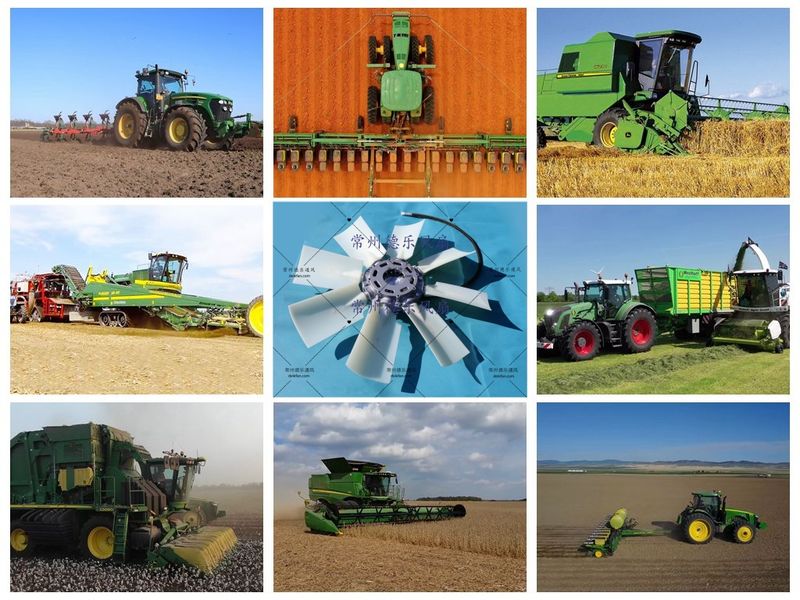
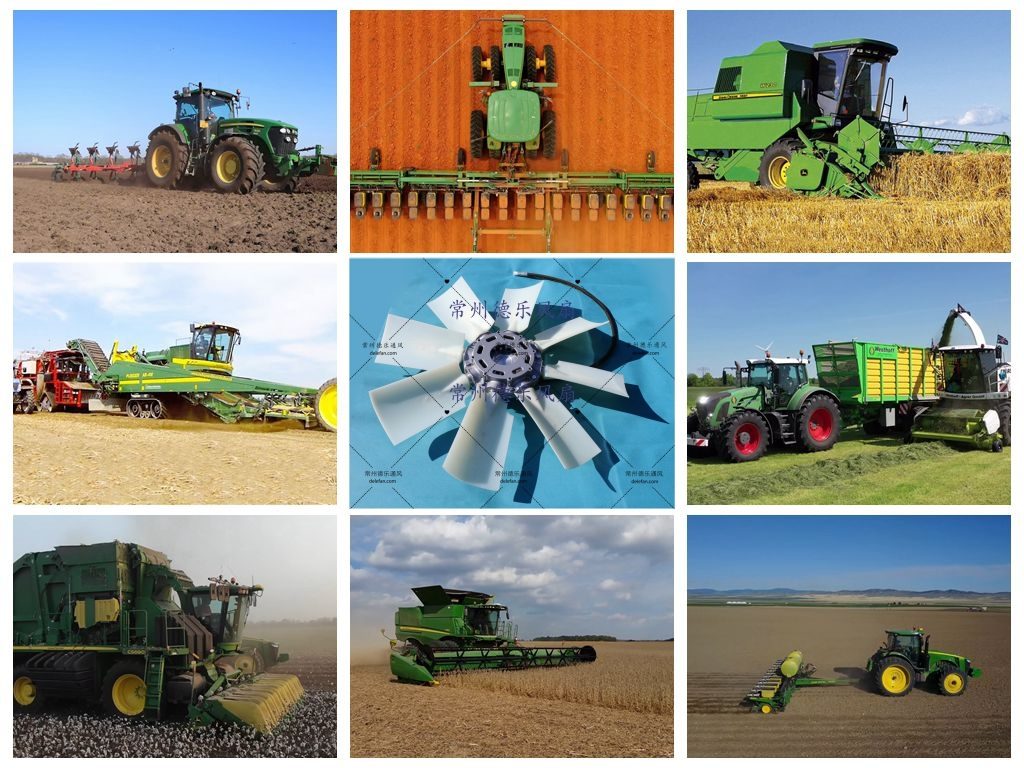
The hydraulic reversible fan is a critical technology in modern agricultural machinery. Through its hydraulic system it either reverses the fan's rotation or changes the blade angle, so that the direction of airflow is reversed. In the dusty, debris-heavy conditions of farm work, this function plays a decisive role in keeping the engine cooling system clean and running efficiently.
Working principle
Hydraulic reversible fans reverse the airflow in two main ways:
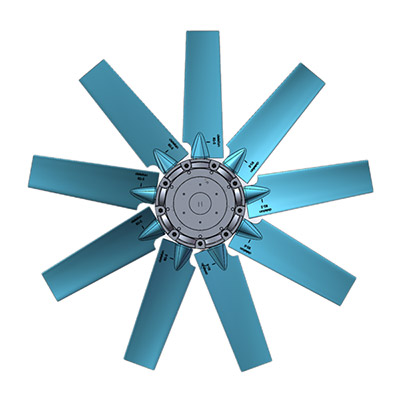
1. Changing the blade angle. Systems of this type are represented by the hydraulic reversible fan (DELE RS 2) produced by Changzhou Dele. The core of the technology is that the fan blades can rotate on the hub.
In normal operation the blades sit at a set angle and draw air through the radiator for cooling. When cleaning is required, a hydraulic or pneumatic actuator drives the blades quickly (usually within 1 second) through the zero position to a reverse angle, so the airflow is reversed and blows outwards, clearing dust, crop debris and other material from the radiator and intake grille. This variable-pitch technology also allows airflow to be controlled precisely in line with the diesel engine's real-time cooling demand, which saves fuel and optimises engine performance.
2. Reversing the hydraulic motor. Another common approach is to change the direction of rotation of the fan's hydraulic motor by means of a valve block. Companies such as Parker supply hydraulic drive systems with an integrated reversing valve. When reverse purging is needed, a solenoid valve is energised, altering the direction of the hydraulic oil flow so that the motor and fan rotate in reverse. Controllers usually include logic that lowers fan speed before and after reversing to avoid shock loads on the system.
Main applications
Hydraulic reversible fans are widely used on high-power agricultural machinery, equipment that generates and draws in large volumes of dust and debris while working.
| Machine type | Application |
|---|---|
| Tractor | Tractors work in clouds of dust during ploughing, seeding, mulching and similar operations, and a reversible fan effectively prevents the radiator from clogging. |
| Combine harvester | Harvesting grain, maize, cotton and other crops draws in large amounts of straw, chaff and dust. A reversible fan can clean automatically at set intervals, ensuring normal cooling while the engine runs for long periods under heavy load. |
| Forage harvester | Harvesting and chopping silage crops produces a great deal of debris, and a reversible fan is essential to prevent radiator clogging. |
| Self-propelled sprayer | During crop-protection work in the field, a reversible fan prevents dust and plant residue from reducing cooling efficiency. |
| Telehandler | Handling hay, grain and other materials around the farm also means a dusty working environment, and a reversible fan helps keep the machine running normally. |
| Beet and potato harvesters | Harvesting these root crops raises large amounts of soil and plant debris, a severe test for the cooling system, and a reversible fan provides an effective solution. |
Advantages
Prevents overheating and protects engine performance. This is the most important benefit. By automatically clearing blockages from the radiator at regular intervals, it maintains optimum cooling and prevents the power loss, or even damage, that overheating causes.
Raises productivity. Automatic cleaning reduces the number of manual stops needed to clean the radiator, and the time each one takes, which significantly increases the productive working hours of the machine.
Saves fuel. By adjusting fan speed on demand and keeping the radiator clean, fan power consumption is reduced. A clogged radiator can absorb an extra 5 hp.
Extends equipment life. Keeping the engine within its proper temperature range, and reducing heat damage to the engine, transmission and hydraulic system, extends the service life of the whole machine.
Lowers fire risk. Removing the dry grass, debris and other combustible material that collects in the engine bay helps reduce the risk of fire.