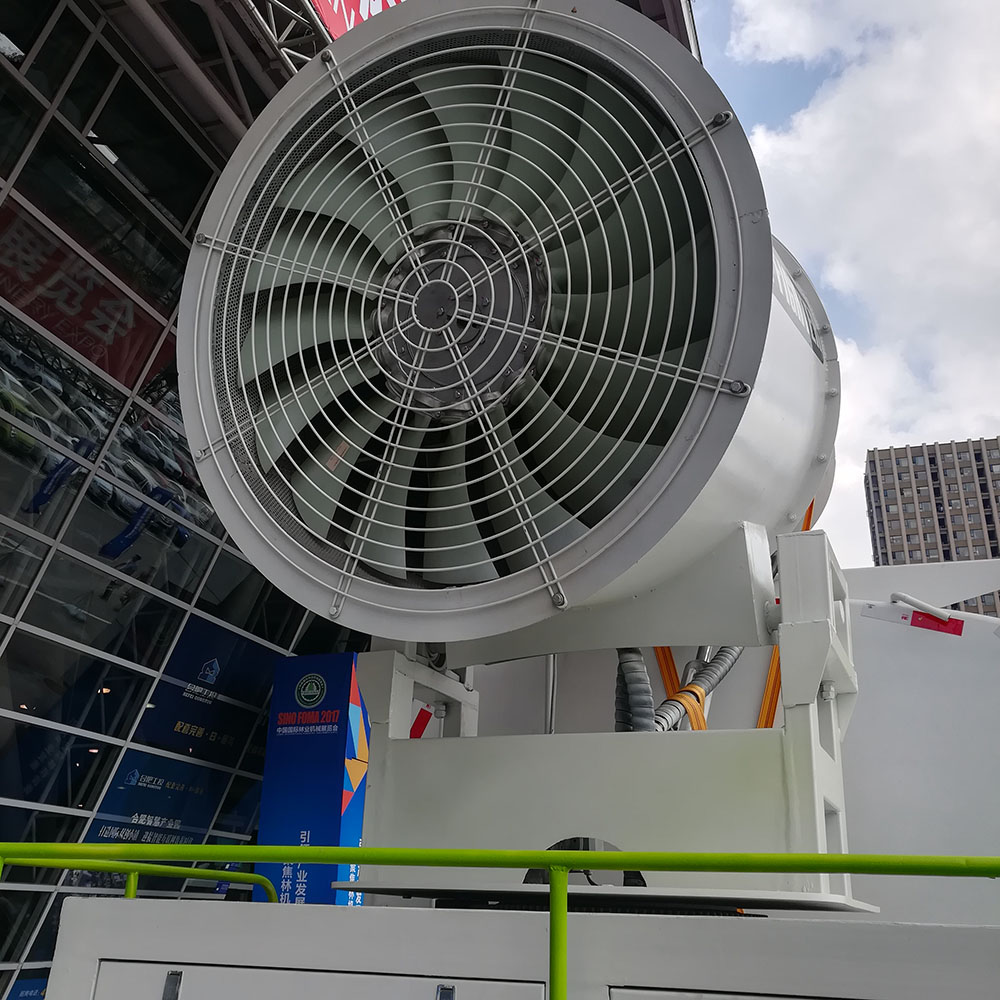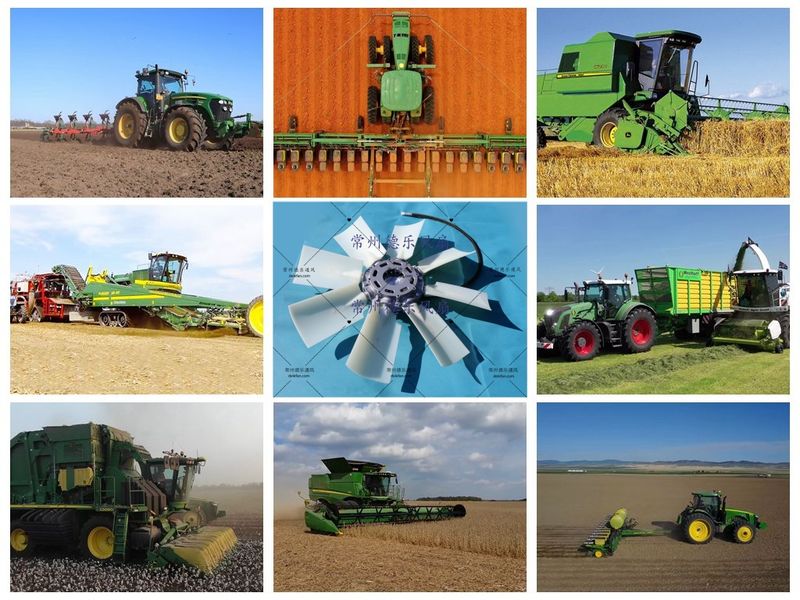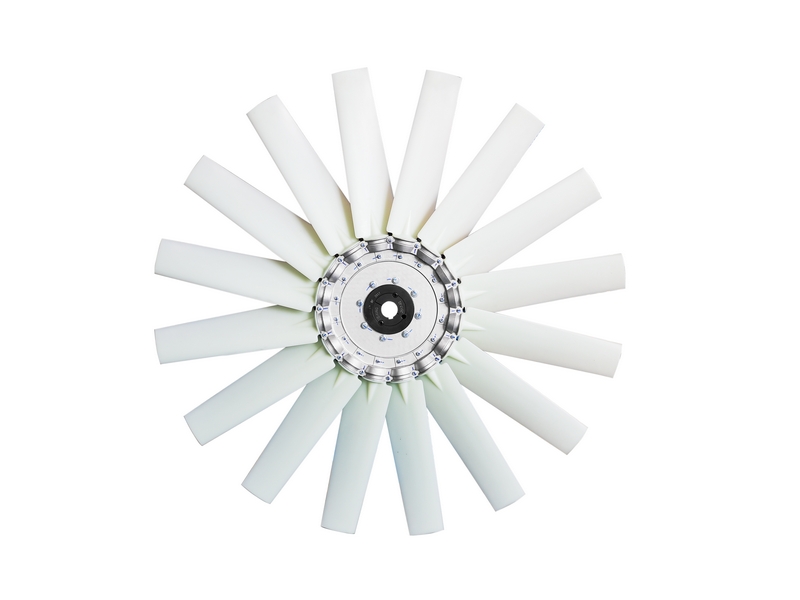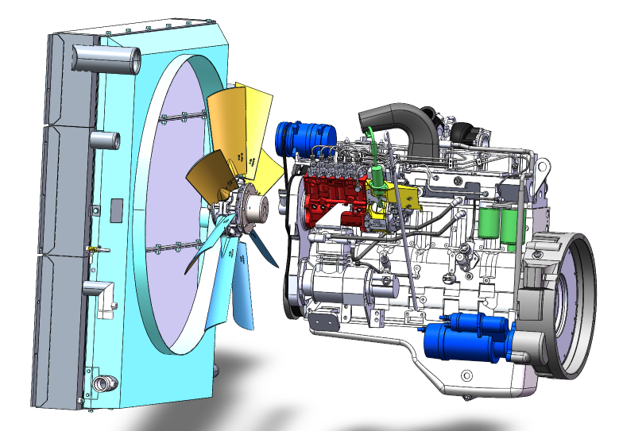
In off-highway machinery and high-dust industrial cooling, the DELE hydraulic reversible fan and the conventional hydraulic reversing fan represent two fundamentally different approaches to reverse-air cleaning.
The core difference is this: DELE keeps the direction of rotation unchanged and turns only the blade pitch, whereas a conventional hydraulic reversing fan reverses the hydraulic circuit so that the whole fan spins backwards. The comparison below covers two main areas.
Part one: cleaning principle, drive requirements, cleaning pressure and airflow, and switching response time
Comparison | DELE hydraulic reversible fan | Conventional hydraulic reversing fan (reversing hydraulic motor / electric motor / variable pump) |
|---|---|---|
Cleaning principle | Each blade rotates 180° about its own root axis | Hydraulic valve or variable pump reverses, changing the motor's direction of rotation |
Drive requirement | Belt drive or a standard hydraulic motor (only control pressure required) | Requires a bidirectional hydraulic motor plus a reversing valve or a bidirectional variable pump |
Cleaning pressure and airflow | Maintained at 100% (the airfoil always faces the optimum direction) | Down 50%–60% (the airfoil curvature is reversed when the fan runs backwards) |
Switching response time | 1–2 seconds (switches at the touch of a button at full engine speed) | 15–30 seconds (the fan must slow down and stop before accelerating in reverse) |
Part two: cost and structural complexity
1. Structural complexity
DELE hydraulic reversible fan
• Hub internal complexity: very high
The hub contains high-pressure hydraulic seals, a rotary oil seal, a piston, linkage hinges and springs. Hydraulic oil has to be fed in through the centre of the rotating shaft, which places very high demands on the internal high-pressure sealing.
• External hydraulic circuit: moderate to low
If the fan is belt-driven by the engine, only a low-flow auxiliary hydraulic control line is needed on the outside — just enough pressure to change the pitch, at very low flow — and no high-displacement main drive circuit.
Conventional hydraulic reversing fan
• Hub internal complexity: very low
• The fan itself is a conventional one-piece moulded or aluminium alloy impeller with no internal moving parts.
• External hydraulic circuit: very high
The main drive circuit must carry high pressure and high flow, and must be fitted with an electronically controlled bidirectional reversing valve or a bidirectional variable swashplate pump. To prevent water hammer from damaging the hydraulic system during reversal, the control system also needs complex sequences for decelerating, stopping and accelerating in reverse.
2. Cost differences
Initial system purchase cost | |
DELE hydraulic version (belt drive) | Fan costs more, external circuit extremely simple |
DELE hydraulic version (motor drive) | Fan costs more, plus a standard motor |
Conventional hydraulic reversing system | Bidirectional pump, valve and motor are expensive |
Initial purchase cost:
DELE hydraulic version (belt drive): the fan itself costs more, but because it avoids an expensive high-displacement hydraulic motor and complex valve block, the total cost is usually slightly lower than that of a complete bidirectional hydraulic drive system.
DELE hydraulic version (hydraulic drive): if a unidirectional hydraulic motor is added to the DELE fan, overall hardware cost reaches its highest level.
Conventional hydraulic reversing: the fan itself is cheap, but the package of bidirectional hydraulic motor, high-pressure reversing valve and high-pressure hoses remains costly.
Running cost and energy efficiency:
DELE: cleaning is very brief (3–5 seconds is enough to clear the core), and the fan can be driven directly by belt (mechanical efficiency >95%), so overall energy consumption is low and the fuel saving is clear.
Conventional hydraulic reversing: because airfoil efficiency is very poor in reverse, clearing the radiator often takes 30 seconds to a minute of high-idle running; and since hydraulic transmission itself loses 15%–30% of the energy, fuel consumption is higher over the long run.
The above compares the DELE hydraulic reversible fan with conventional hydraulic reversing fans (reversing hydraulic motor / electric motor / variable pump). You can choose the product that suits your own operating conditions; if you need technical support, please contact us.