As ski resorts, outdoor ice-and-snow parks and professional snowmaking facilities continue to develop, the operating efficiency, environmental adaptability and maintenance costs of snow machines are drawing growing attention. As a key component of a snow machine, the fan blade (impeller) not only affects airflow organization and the delivery of water mist, but also has a direct bearing on operating stability, energy consumption and service life.
For snow machines of different models and under different operating conditions, how do you choose the right fan blade (impeller)? DELE advises that the choice should not be based on diameter, blade count or appearance alone; aerodynamic performance, material properties, structural strength, operating speed and the actual operating environment all need to be considered together.
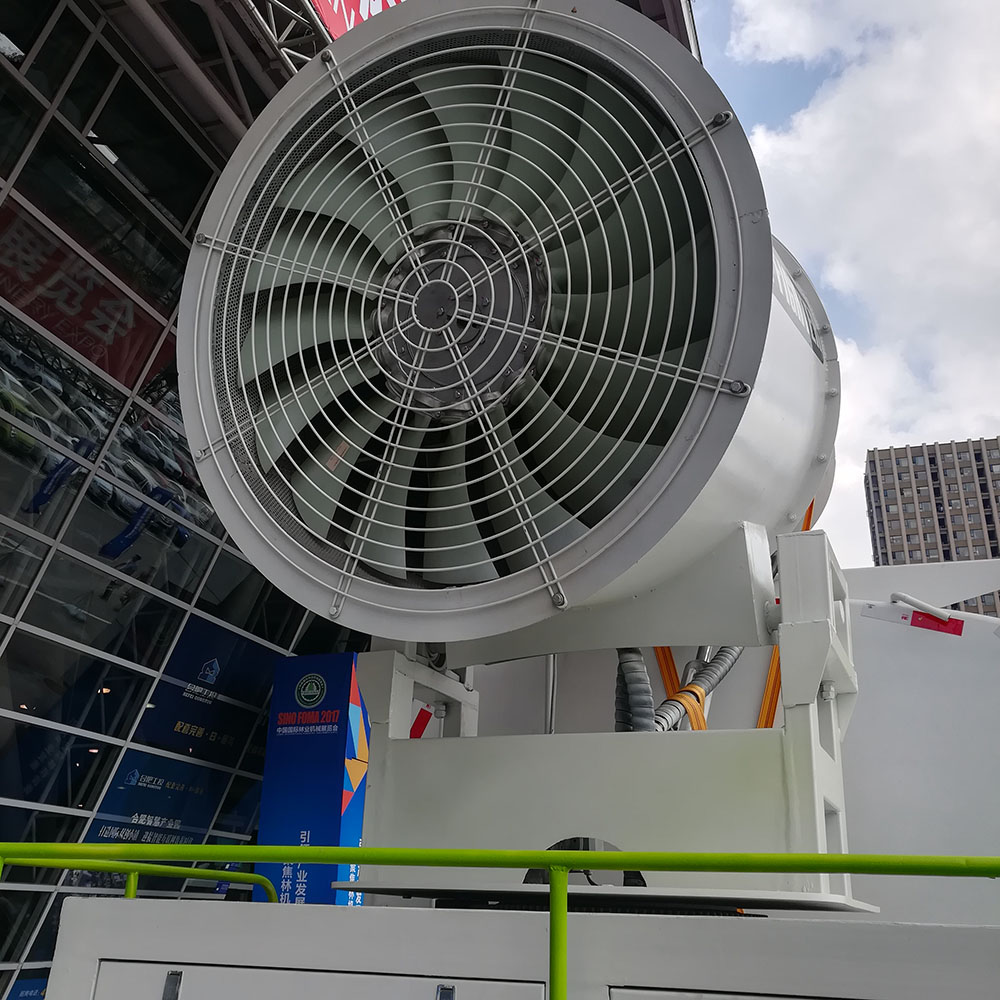
1. Define what the snow machine needs to do and avoid choosing blindly
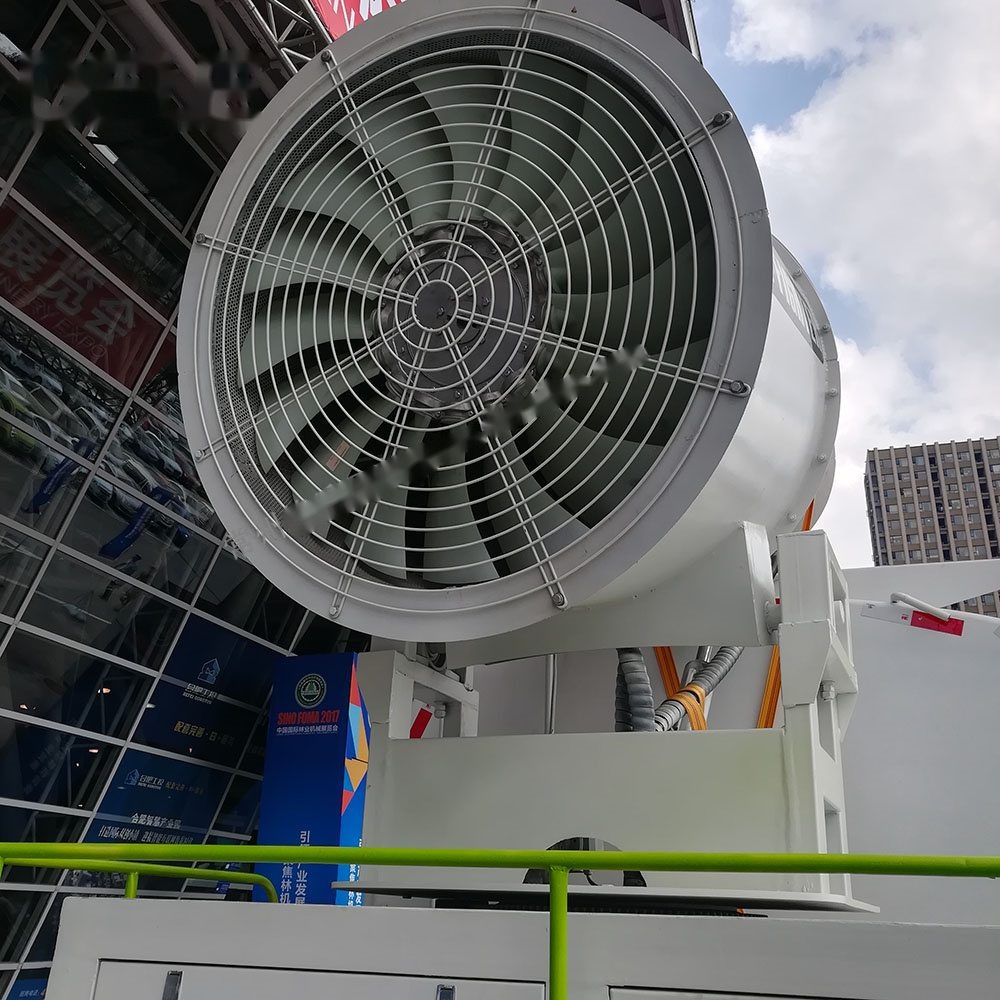
The main function of a snow machine fan blade (impeller) is to generate airflow with a certain volume and velocity that carries atomized water droplets into a suitably cold environment, where the droplets cool, freeze and form snow crystals. The performance of the fan blade therefore has to match the design of the whole machine.
Before choosing, we recommend confirming the following parameters:
1. Fan diameter and mounting dimensions: including outside diameter, center bore, mounting hole spacing, hub dimensions and axial installation space.
2. Operating speed: the rated speed, the maximum working speed and whether variable-frequency speed control is used should all be clarified.
3. Aerodynamic requirements: including target airflow, required pressure and the system resistance created by ducts, shrouds and other structures.
4. Drive and connection: including motor power, transmission method, and the shaft sleeve or hub connection.
5. Operating environment: including minimum operating temperature, humidity, meltwater, icing risk and outdoor corrosion conditions.
Note that more airflow is not necessarily better. The fan must work in harmony with the nozzle layout, the fan barrel structure and the machine's overall airflow design to achieve proper airflow coverage and snowmaking performance.
2. Choose materials that balance low-temperature performance and durability
Snow machines typically operate in cold, humid conditions where icing is possible, so the choice of blade material matters a great deal. Common options include engineering plastics, reinforced composites and aluminum alloys, each suited to different applications.
1. Reinforced engineering plastics and composites
Materials such as glass-fiber reinforced polyamide (reinforced nylon, PA-GF) are light, flexible to mold and corrosion resistant, and suit products with requirements on weight, aerodynamic profile and volume manufacturing. Their properties are affected by temperature, moisture absorption, formulation and fiber content, however, so impact toughness, stiffness and dimensional stability at the actual minimum operating temperature must be confirmed.
2. Aluminum alloy (AL)
Aluminum alloys offer good specific strength, machinability and heat dissipation, and suit some medium-to-large blade designs or designs with specific structural requirements. At low temperatures, however, reliability cannot be judged from the label "aluminum alloy" alone; the specific alloy grade, heat treatment condition, casting or machining process, and the loads at the hub-to-blade connection all need to be evaluated.
3. Base material choice on actual operating conditions
Whichever material is used, low-temperature impact performance, fatigue durability, corrosion resistance and long-term operating stability deserve close attention. For equipment subject to frequent starts and stops, icing or the risk of foreign-object impact, validation for those conditions should be strengthened.
3. Focus on aerodynamic design, not just blade count
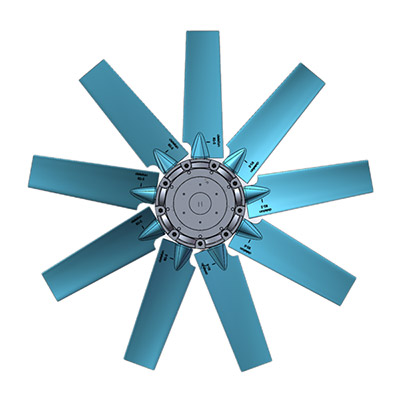
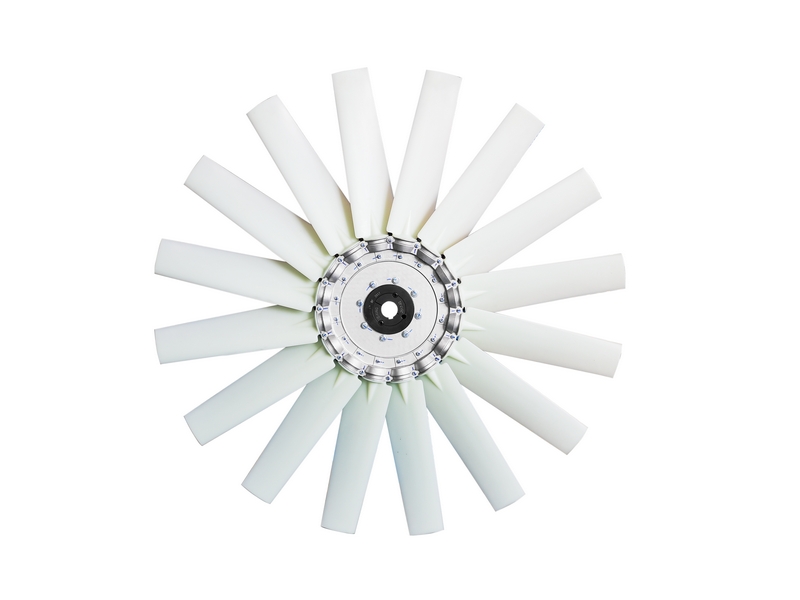
Blade count, setting angle, twist angle, chord length and airfoil together determine a fan's aerodynamic characteristics. Different designs affect airflow, pressure, efficiency, noise and motor load.
At the same diameter and speed, adding blades does not necessarily increase airflow; if blade spacing, airfoil or setting angle are poorly designed, flow losses and noise may even increase.
When selecting a snow machine fan blade, therefore, focus on the following:
1. Airflow and pressure matching: the fan performance curve should cover the operating point required by the machine.
2. Aerodynamic efficiency: minimize unnecessary energy loss while meeting snowmaking requirements.
3. Noise performance: consider blade aerodynamic noise, rotational noise and vibration generated by the machine structure.
4. Speed adaptability: for variable-speed equipment, confirm performance and safety across the full permitted speed range.
For projects with specific performance requirements, ask suppliers for fan performance curves, test conditions and the necessary validation data, rather than judging on theoretical airflow or a single speed point.
4. Mechanical strength and dynamic balancing are essential to safe operation
Snow machine fans usually have a large rotating diameter, and at high speed the blades and hub must withstand centrifugal loads, aerodynamic forces and cyclic vibration. Inadequate structural design, defects at connections or excessive manufacturing variation can all affect safety and service life.
When purchasing, check the following in particular:
The first is structural strength. Blade roots, hubs, mounting holes and shaft-sleeve connections are usually the critical load-bearing areas, and strength should be assessed against material properties, speed and loads.
The second is dynamic balancing. Unbalance in rotating parts can cause vibration and noise and increase the load on bearings and the drive system. The applicable balance grade should be determined from product quality, operating speed and the relevant technical requirements, and finished parts should be tested accordingly.
The third is rotational safety validation. For high-speed, large-diameter fans, the necessary overspeed, endurance or other safety validation should be carried out based on risk assessment and product design requirements. The specific test methods and acceptance criteria should be determined by the manufacturer in line with applicable standards and the product's operating conditions.
Also pay attention to details such as cracks at blade roots, surface defects, hub deformation, fastener locking and mounting concentricity, so that manufacturing or assembly issues do not affect machine operation.
5. Low-temperature performance, ice protection and corrosion resistance matter
Snow machines are exposed to cold, humid conditions for long periods, and fan blades may be affected by water mist, meltwater, icing and repeated temperature changes. During starts and stops in particular, ice buildup on blade surfaces or inside the duct can change the mass distribution and increase the risk of rotational unbalance.
When purchasing, find out whether the product's materials have been validated for low-temperature conditions, and whether blade surface treatment, drainage design and the machine's ice protection suit the actual operating conditions.
For snowmaking projects in severely cold regions or with long continuous run times, clarify the minimum ambient temperature, maintenance intervals and shutdown procedures for abnormal icing before purchase.
6. How to choose a reliable supplier of snow machine fan blades?
Beyond product parameters, a supplier's design and manufacturing capability matter just as much. A professional supplier should be able to give targeted selection advice based on the machine interface, performance requirements and operating conditions.
During procurement, focus on:
1. Dimensional and interface confirmation: can complete dimensional drawings, mounting interfaces and tolerance requirements be provided?
2. Aerodynamic design and testing: can performance curves and the supporting test evidence be provided?
3. Material and quality traceability: are material specifications, manufacturing processes and quality inspection records clearly documented?
4. Dynamic balancing and safety validation: can test documentation matching the product specification and operating conditions be provided?
5. Custom development: can designs be adapted to special diameters, mounting methods, speeds and environmental conditions?
For replacement purchases, provide an old fan sample together with information on outside diameter, center bore, mounting hole spacing, hub dimensions, speed and motor parameters. Replacing a fan on appearance alone can lead to mounting mismatch or performance deviation.
Conclusion
Choosing fan blades for a snow machine is a systematic task involving aerodynamics, materials, structure and manufacturing processes. A well-judged selection not only improves airflow delivery efficiency but also reduces unnecessary energy consumption and vibration risk, and improves reliability in severe cold.
For equipment manufacturers, ski resort operators and maintenance buyers, the most effective approach is to start from real operating conditions and machine requirements, and to use parameter confirmation, performance curve analysis, material validation and the necessary safety testing to choose the blade that truly suits the equipment, rather than simply pursuing a larger diameter, more blades or a lower purchase price.
Changzhou Dele Cooling Technology Co., Ltd. welcomes your technical questions about snow machine fan blades and is ready to help with selection at any time.